Burn Ban in Effect. All outdoor burning is prohibited in Franklin County.



The Texas Water Development Board (TWDB) approved by resolution financial assistance in the amount of $10,703,090 to the City of Mount Vernon, consisting of $1,075,000 in financing and $9,628,090 in grant funding, from the Rural Water Assistance Fund (RWAF). The City will use this assistance to construct water system improvements.
In addition to the grant funding, the City could save approximately $351,000 in interest and finance charges over the life of the loan by using the RWAF.
With this assistance, the City will reduce water loss in its distribution system by replacing over 50,000 feet of water lines, adding 2,000 feet of distribution lines, and installing 11 fire hydrants.
Background
The top priorities of municipalities are twofold: Public Safety (Fire and Police) and Public Utility Services (Water and Wastewater). Everyone sees fire trucks and police cars moving through their neighborhoods. No one sees water distribution lines bringing water to their homes or wastewater lines moving wastewater away from their homes, as these are hidden underground.
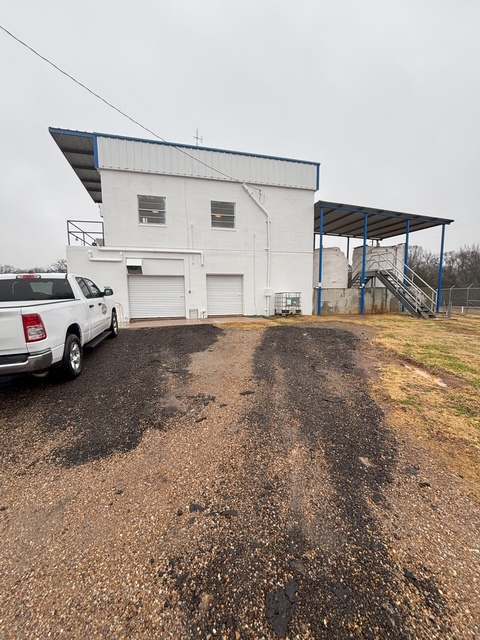
If you were to ask a resident of any city where the municipal water treatment or wastewater treatment plants were located, you would receive the simple answer “I have no idea”, and probably “I have never thought about them.” I’ve been in local government service for over 30 years and have never had a citizen ask me to take a tour of our wastewater or water treatment plants. If you were to ask most people where their water came from, they would simply say “out of the faucet.” They would have no idea that it is pumped out of the lake, travels in a large pipe 8 miles to the water treatment plants, where it becomes drinkable water, and then is pumped through other lines to serve thousands of connections, which include houses, schools, businesses, industries, hospitals, etc.
Public utility services are hidden underground, and few care about them until the water stops coming out of the faucet or the toilet stops flushing. If everything is working, then why bother thinking about it? Because it is hidden, it is easy for civic leaders to ignore the need to update or replace water and wastewater lines, as well as to maintain water and wastewater treatment plants. Another contributing factor is that replacement and maintenance of these are extremely expensive.
Five years ago, leadership in the city changed. The newly elected mayor and council decided to prioritize the city’s water and wastewater infrastructure. They recognized that this would require an investment, but if it was not made, citizens would suffer, and the city would not grow. They learned that many of the water and wastewater distribution and collection lines in our city are between 60 and 100 years old. The Council commissioned an engineering study of the water distribution and wastewater collection lines in most need of replacement. The study reveals that the projected replacement cost is approximately $10 million. This study considered only a small percentage of the city's lines. This was the start of a four-year effort to improve infrastructure and ensure high-quality water for Mount Vernon's future.
From 2022 to 2025, the City invested some of its reserves in making needed improvements. The Council approved replacing 50-year-old pumps at Lake Cypress Springs and installing a generator to ensure the city has access to raw water in the event of a power outage. Council also approved major improvements to the water treatment plant. No improvements or upgrades have been made to the plant in over 50 years. Council also approved major improvements to the wastewater treatment plant. These included new pumps, a new generator, and others. Overdue maintenance and repairs to the elevated water towers were also made. Finally, the Council also invested in engineering and design work. The Council commissioned the engineers to design replacements for aging water and wastewater lines, the 8-mile-long 12-inch waterline that transports water from the lake to the water treatment plant, and a necessary expansion of the wastewater treatment plant.
In 2024, the City Council approved applications to the Texas Water Development Board for funding to support these needed improvements and expansions. The Council understood that if these improvements were not completed, the city could not grow, because we were reaching capacity for the production of fresh water and treatment of wastewater.
In September 2025, the Texas Water Development Board approved $10,703,090 in assistance to the City for the replacement of the waterline from the lake to the water treatment plant, and over 50,000 feet of aging water distribution lines in the city. Because of the city’s investment in improvements and engineering, the Texas Water Development Board provided this assistance in the form of a $9,628,090 grant and a $1,075,000 low-interest loan. We have been notified that the Texas Water Development Board is also providing additional assistance for the expansion of the wastewater treatment plant through a grant and a loan. This should be finalized later this year or early 2027.
This is a remarkable achievement for our city and clearly demonstrates what good leadership, which recognizes the role of planning and investment, can achieve. The city would never be able to support the cost of these improvements without the grant from the Texas Water Development Board. Their support and the investments made by the Mount Vernon City Council have helped to secure the future of Mount Vernon.