Burn Ban in Effect. All outdoor burning is prohibited in Franklin County.



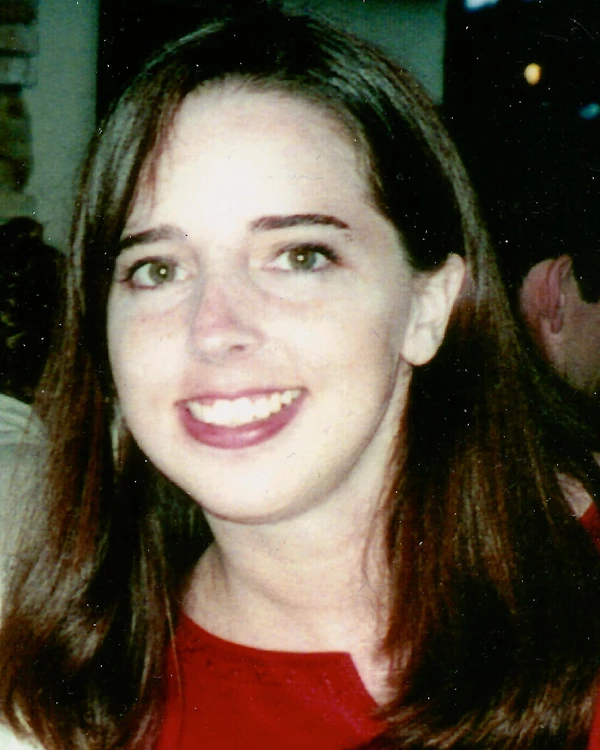
She was 27 years old.
And in her final minutes alive, she tried to comfort everyone else.
On September 11, 2001, a young woman picked up an Airfone on a hijacked plane and spoke eight words her family has carried for the rest of their lives:
“This is going to be so much harder for you than it is for me.”
Her name was Honor Elizabeth Wainio.
Everyone called her Lizz.
Two days earlier, she had been in Paris.
She had just returned from Europe — a long-anticipated trip filled with joy. She attended a friend’s wedding in Florence. She walked the Champs-Élysées. She stepped into a church and lit a candle for her grandmother.
She once told her mother that if she ever got to see Paris, she could die happy.
She was 27. A rising district manager for Discovery Channel Stores. Driven. Organized. Warm. The kind of person who lived quickly because she believed there was so much life ahead.
On the morning of September 11, 2001, Lizz boarded United Airlines Flight 93 in Newark, bound for San Francisco.
There were 40 passengers and crew onboard.
At 9:28 a.m., four hijackers stormed the cockpit.
The plane violently dropped 700 feet. Screams filled the cabin. Passengers were forced to the rear of the aircraft.
But something happened on Flight 93 that changed history.
Through phone calls placed from seat-back Airfones and cell phones, passengers learned the unimaginable truth: planes had already struck the World Trade Center. The Pentagon had been hit.
This was not a hostage situation.
It was a coordinated suicide attack.
The people onboard understood before it was too late.
In the chaos, someone handed Lizz a phone.
“Call someone you love.”
She reached her stepmother, Esther.
Her voice, according to family accounts and later investigations, was steady. Clear. Not hysterical. Not broken.
She was trying to protect the person on the other end.
“It just hurts me most,” she said, “that this is going to be so much harder for you than it is for me.”
A 27-year-old woman, facing death at 30,000 feet, worried more about her family’s grief than her own fear.
They spoke for several minutes — about four, according to reports. They breathed together. There were no dramatic speeches. Just love carried through static.
Then Lizz said something else.
“I’m gonna be with Grandma.”
Her grandmother had lived near rural Pennsylvania — not far from where the plane would ultimately crash. Lizz could not have known that.
But in that moment, she found comfort in reunion.
At 9:57 a.m., passengers made a collective decision.
They were going to fight back.
Flight attendant Sandra Bradshaw told her husband she was boiling water to throw at the hijackers. Passenger Todd Beamer prayed the Lord’s Prayer with an operator and said words that would echo across a stunned nation:
“Let’s roll.”
Lizz’s final words came just before the counterattack began.
“They’re getting ready to break into the cockpit. I have to go. I love you. Goodbye.”
At 10:03 a.m., Flight 93 crashed into a field near Shanksville, Pennsylvania.
Investigators later concluded the hijackers were likely targeting either the U.S. Capitol or the White House. Because the passengers resisted, the aircraft never reached its intended target.
The 40 passengers and crew were later awarded the Congressional Gold Medal in recognition of their courage.
Today, the site is preserved as the Flight 93 National Memorial.
There stands the Tower of Voices — 40 wind chimes, each tuned to a distinct note. When the wind crosses that quiet Pennsylvania field, the chimes do not blend into one sound.
They remain separate.
Individual.
For years, Lizz’s father would call her cellphone just to hear her voicemail greeting. One day, the service was discontinued. The message was gone.
He later said losing her voice a second time felt unbearable.
At the memorial, he listens for a particular chime.
“That’s my daughter,” he says.
Honor Elizabeth Wainio’s story is not only about how she died.
It is about how she chose to live her final minutes.
She had just seen Paris. She had just lit a candle for her grandmother. She had plans. She had momentum. She had a future.
And when the worst moment imaginable arrived, she did not ask for comfort.
She gave it.
In a day remembered for smoke and terror, there were also phone calls filled with grace. There were strangers who became allies. There were ordinary people who refused to surrender quietly.
Thirty thousand feet above the earth, a young woman chose love over panic.
And because of people like her — frightened, human, brave — history shifted.
We remember her.
We remember all forty.