Burn Ban in Effect. All outdoor burning is prohibited in Franklin County.



There are some needs in a community that don’t always show up on a calendar or in a headline, but they quietly shape someone’s ability to live their daily life. Something as simple as getting out the front door, checking the mail, or making it to a doctor’s appointment can become a challenge without the right support. That’s where Texas Ramps steps in, and for many families across Franklin County, that support has already made a positive difference.
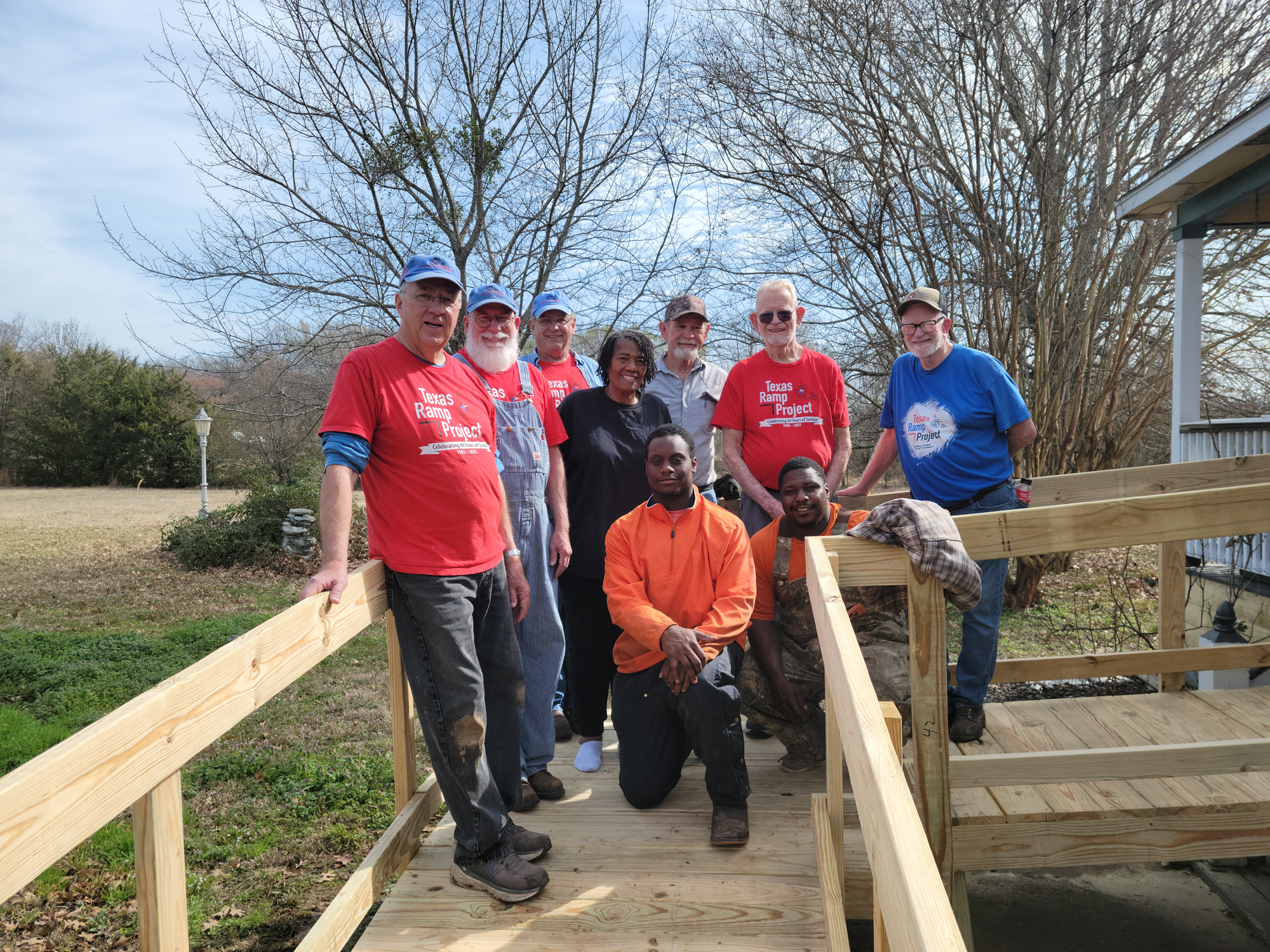
Texas Ramps began as a local effort in Dallas in the early 1980s, then expanded into a statewide nonprofit with a clear goal: to serve every county in Texas. Today, the organization has reached more than half of the state’s 254 counties, building wheelchair ramps for elderly and disabled residents at no cost to the people they serve. What started as a small mission has grown into a coordinated effort supported by volunteers, churches, and donors who believe in helping people stay safely in their homes.
Locally, much of that work is driven by a team connected through Tennyson United Methodist Church in Mount Pleasant. Volunteers like Jerry Hearron and others were drawn in through the enthusiasm of longtime leaders who saw the need and took action. For many of them, retirement opened the door to invest their time in something tangible, something that delivers immediate impact. And for those who have spent time on a build, the reward is easy to see.
It’s not only about lumber and measurements. It’s about access.
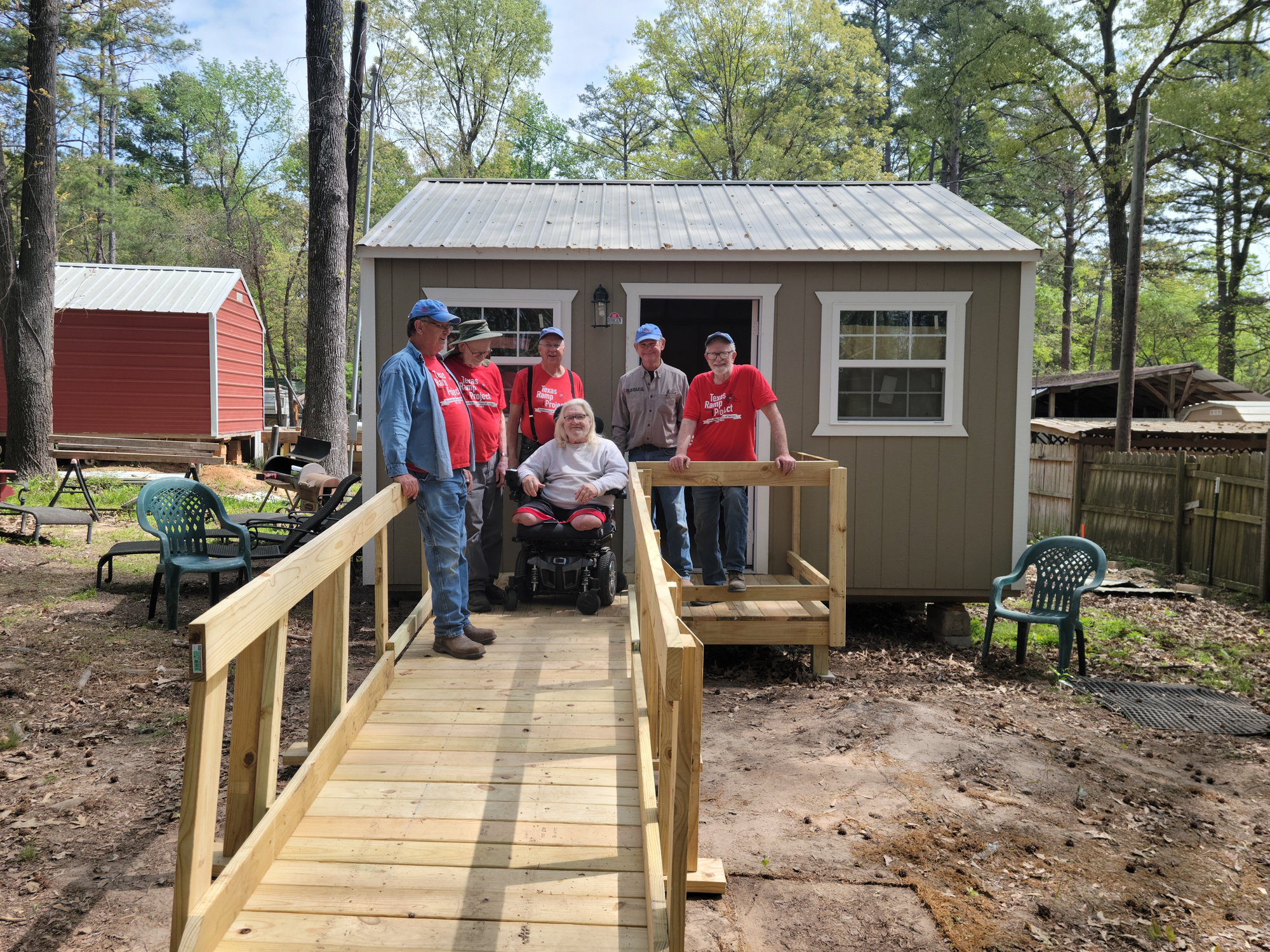
A ramp can mean the difference between isolation and independence. It allows someone to attend church again, keep a doctor’s appointment, or simply enjoy a drive through town. In one local example, a ramp built in Scroggins has enabled a resident to regain the freedom to leave her home, check her mail daily, and stay connected to her environment. It’s a small structure with a significant impact.
There’s also a wider effect that frequently goes unnoticed. Providing safe access to a home can help individuals remain in their homes, avoiding the need for assisted living or nursing care. According to Texas Ramps, a single ramp, often costing around $1,000 in materials, can help prevent tens of thousands of dollars in long-term care expenses. But for the volunteers, the value lies less in numbers and more in people.
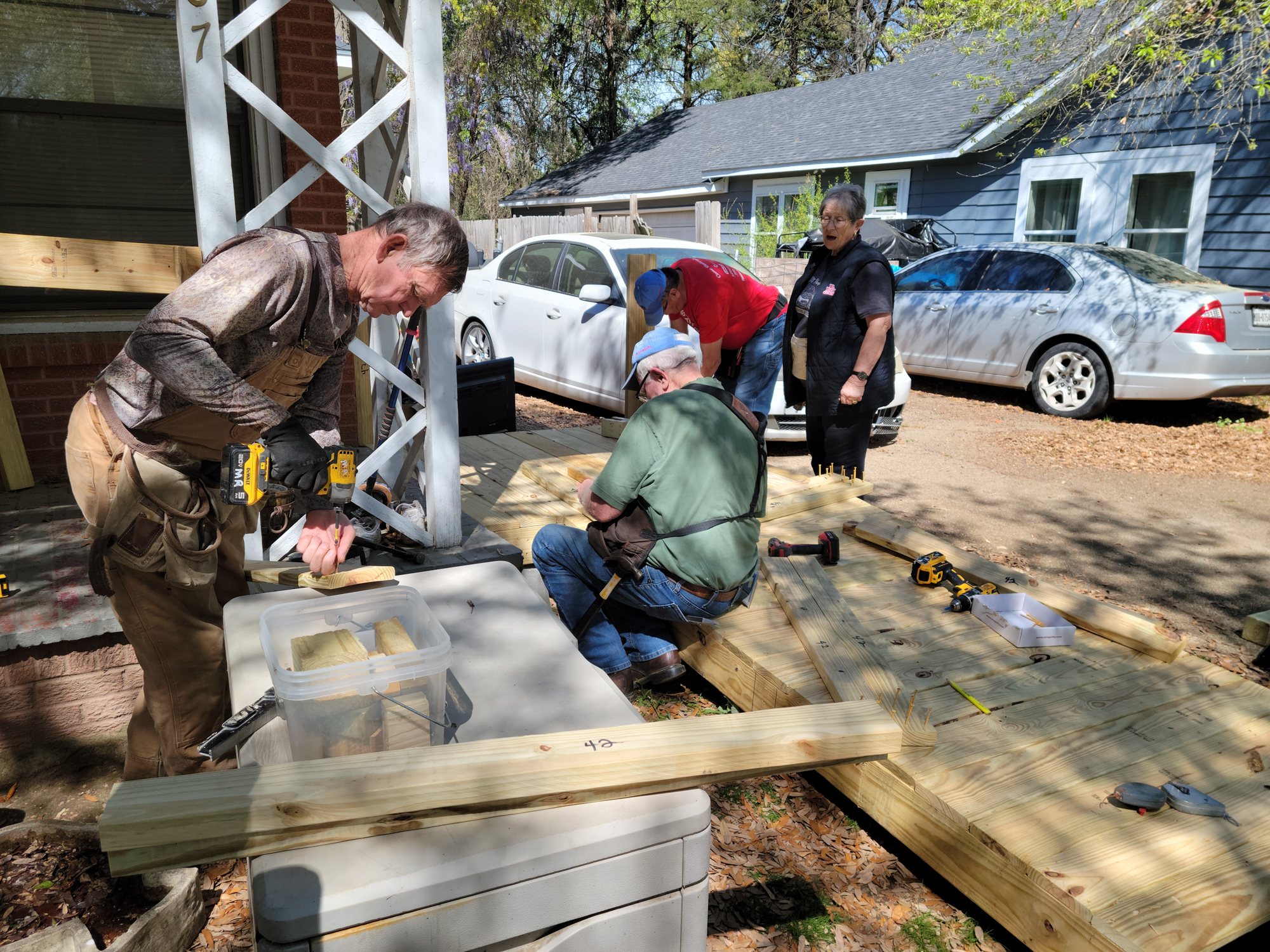
The process itself is efficient and well-organized. When a need is identified, often by a healthcare worker, social worker, or family member, a referral is submitted through the Texas Ramps website. From there, the local team receives the information, contacts the resident, and schedules a visit to measure and plan the build. Materials are purchased through donations and statewide funding support, and much of the construction is prepared in advance using modular sections. On build day, those pieces come together quickly, frequently allowing a full ramp to be completed in just a few hours.
The demand, however, continues to grow.

So far this year, the local team has completed 18 ramps across Titus, Franklin, and surrounding counties, with 6 in Franklin County alone. Last year, they built 42. The year before that, 40. Each year, the need increases, and so does the opportunity to serve.
That growth is exactly why there’s now a focused effort to build a stronger volunteer base in Franklin County. The goal is simple: create a dedicated local team that can respond more quickly and expand the program's reach. Leading that effort will be a Franklin County-based builder, supported by the existing team’s experience and structure.
One of the most encouraging aspects of this work is its approachability to volunteers. There’s no requirement for construction experience. Most people learn by showing up, watching, and gradually taking on more responsibility. By the second or third build, many volunteers are fully engaged in the process. Whether it’s operating a drill, assembling sections, or merely lending a hand where needed, every role matters.

Flexibility is a further key part of the model. Volunteers don’t have to commit to every build or even a regular schedule. Some come when they can, others bring students needing service hours, and many simply show up when they hear about a need. A typical build might have six to ten people, but having a larger pool makes certain that each project has the support it needs.
And perhaps most importantly, every ramp is built at no cost to the recipient. The labor is entirely volunteer-based, and the materials are covered through donations and organizational funding. For the person receiving the ramp, there is no bill—just a new way to move forward.
That mission is made possible not only by volunteers, but by the generosity of donors who believe in keeping their neighbors safe at home. Those who would like to support the effort can give online at texasramps.org and simply indicate that their donation is designated for Franklin County. For those who prefer to give by mail, checks can also be sent with a note specifying that the contribution is for Franklin County ramps. The organization provides itemized financial reports each quarter, offering transparency into how funds are used and where support is making an impact.
It is also worth noting that across the entire Texas Ramps organization, there are only two paid employees. Every other role, from leadership to labor, is carried out by volunteers. In a time when many organizations rely heavily on staffing, that level of volunteer-driven impact stands out and touches the heart behind the mission.
For those interested in getting involved, there are a couple of simple paths. Referrals for individuals in need can be submitted directly through the Texas Ramps website by clicking the “Refer a Ramp” option. Those interested in volunteering can also sign up online or contact the local program team. Even a single day on a build can make a difference.
As the effort continues to grow in Franklin County, the need is clear, but so is the opportunity. Sometimes doing good in a community doesn’t require a long-term commitment or a specialized skill set. Sometimes it just takes showing up, picking up a tool, and helping someone take their next step.