Burn Ban in Effect. All outdoor burning is prohibited in Franklin County.



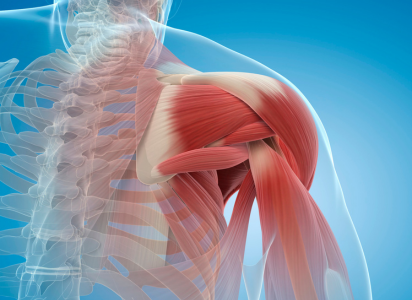
As we get older, most of us worry about security, savings accounts, retirement plans, and insurance policies. We understand that if we don’t invest early and consistently, the future gets harder. Your muscles work the same way. Think of muscle as your retirement account for independence. The more you invest in strength now, the more time you can spend later on walking, traveling, playing with your grandkids, and living life on your terms.
Sarcopenia is the medical name for age-related muscle loss. It sounds technical, but the idea is simple. “Sarco” means muscle, and “penia” means loss of. Sarcopenia describes the gradual loss of muscle mass, strength, and function as we get older (Li et al., 2026). This isn’t just about looking less toned in the mirror. It is about how easily you can get up from a chair, climb stairs, carry groceries, or catch yourself if you trip on the sidewalk. One of the most surprising facts is how early this process begins. On average, adults begin to lose muscle in their 30s and 40s (Broome et al., 2024). The decline is slow at first, maybe one percent of muscle per year, but over decades, that adds up. Beyond the age of 50, muscle loss increases by about 2% per year, with strength loss ranging from 2-5% per year (Cruz-Jentoft et al., 2019). By the time someone reaches their 70s or 80s, this loss can translate into real problems, including slower walking speed, more fatigue, difficulty with daily tasks, and a higher risk of falls and fractures (Wang et al., 2025).
Why does this happen? Part of the answer is biology. As we age, our bodies don’t respond to food and exercise quite as efficiently as they did at 20. The signals that tell muscles to repair and grow after a meal or a workout become a bit “dimmer.” This is called anabolic resistance (Tu et al., 2025). Hormones change. Nerves that activate muscle fibers may not fire as smoothly. Inflammation and chronic diseases also interfere with muscle maintenance. But biology is only half the story. Lifestyle plays a huge role. Many adults move less as careers become more sedentary and family responsibilities crowd out time for exercise (Pereira et al., 2025). We often underestimate how much protein we need, especially as we age. Skipping breakfast, grazing on snacks, or relying on low-protein ultra-processed foods means the body doesn’t always get the building blocks it needs to maintain muscle tissue. Over time, less movement plus less muscle fuel accelerates the decline.
The most important message is that sarcopenia is not an inevitable consequence of aging (Jang et al., 2023). It is a risk, not a destiny. Muscle loss is modifiable. You can slow it down, and in many cases, you can even reverse it. Fortunately, your muscle reserves respond to the work and effort you put in throughout life. So, what does it take to preserve and maintain muscle mass? First, protein. Muscles are built from amino acids, the smaller units found in protein-rich foods. As we age, our muscles become picky eaters. They need a slightly higher, more consistent protein signal to respond (Zhao et al., 2025). That means it’s helpful to include a meaningful source of protein at each meal, something like eggs, Greek yogurt, cottage cheese, lean meats, and fish. Picture each meal as an opportunity to send your muscles a strong message to stay, repair, and grow.
Second, strength training. Many people assume walking is enough, and walking is certainly better than sitting. But for muscle maintenance, you need to regularly challenge your muscles against resistance using your own body weight, dumbbells, resistance bands, or machines (Kim et al., 2025). Engaging in strength-training exercises not only stimulates muscle protein synthesis but also enhances neuromuscular coordination, which is particularly important as muscle function naturally declines with age (Li et al., 2026; Zhao et al., 2025). This doesn’t require a fancy gym or extreme workouts. Simple movements like sit-to-stand from a chair, wall push-ups, step-ups, or carrying groceries in both hands can be powerful when done consistently. Think of resistance exercise as your body’s primary stimulus for muscle growth, significantly increasing muscle quality, strength, and mass (Li et al., 2026). The signal is specific. When you ask a muscle to work a bit harder than usual, it receives a message that says we’re still needed, stay strong. Without that message, the body assumes it can downsize.
Third, daily activity. Beyond formal exercise, everyday movement matters. Long stretches of sitting tell your body that strength and endurance are not priorities. Breaking up sitting time with brief movement like standing, doing a few calf-raises at your desk, walking around the house, or office adds up over weeks and months. Additionally, exercise snacks, which are short and efficient bursts of exercise spread throughout the day, are a convenient and effective way to increase physical activity levels (Wan et al., 2025). These small choices, started early in life, provide significant cumulative benefits over time. Early prevention matters because it is easier to maintain muscle than to rebuild large amounts already lost. Consuming protein, strength training, and daily movement in your 30s, 40s, and 50s lays a stronger foundation for your 70s and beyond. But if you are already past those decades, do not be discouraged. Muscles remain adaptable throughout life (Pereira et al., 2024; Zhang et al., 2024). It is never too late to start.
You can begin today with a simple checklist:
• At each meal, include a palm-sized portion of protein to ensure you are getting adequate protein.
• Stand up from a chair and sit back down 10 times in a row at a comfortable pace. Do this 3-5 times each day to enhance muscle function.
• Take a walk around the block, down the driveway, or inside a store. Go a bit farther than you usually go.
• Notice how these actions feel, and remind yourself that this is an investment in my future independence.
Sarcopenia may be a silent epidemic, but your response does not have to be silent. Every choice to move more, lift something a little heavier, and feed your muscles a little better is a small but meaningful deposit in your strength savings account. Your future self will thank you for the balance you build today.
References
Broome, S. C., Whitfield, J., Karagounis, L. G., & Hawley, J. A. (2024). Mitochondria as Nutritional Targets to Maintain Muscle Health and Physical Function During Ageing. Sports Med, 54(9), 2291-2309. https://doi.org/10.1007/s40279-024-02072-7
Cruz-Jentoft, A. J., Bahat, G., Bauer, J., Boirie, Y., Bruyère, O., Cederholm, T., Cooper, C., Landi, F., Rolland, Y., Sayer, A. A., Schneider, S. M., Sieber, C. C., Topinkova, E., Vandewoude, M., Visser, M., & Zamboni, M. (2019). Sarcopenia: Revised European consensus on definition and diagnosis. Age Ageing, 48(1), 16-31. https://doi.org/10.1093/ageing/afy169
Jang, J. Y., Kim, D., & Kim, N. D. (2023). Pathogenesis, intervention, and current status of drug development for sarcopenia: A review. Biomedicines, 11(6), 1635. https://www.mdpi.com/2227-9059/11/6/1635
Kim, H., Kim, J., Lee, C., & Kim, S. (2025). Nutrition and exercise for sarcopenia treatment. Osteoporos Sarcopenia, 11(2 Suppl), 54-64. https://doi.org/10.1016/j.afos.2025.05.008
Li, H., Chen, Z., & Songlin, X. (2026). Revitalizing Muscles: Harnessing Exercise to Modulate Inflammatory Cytokines and Conquer Sarcopenia in Aging. Cell Biochemistry and Biophysics. https://doi.org/10.1007/s12013-026-02004-4
Pereira, B., Monteiro, D., Matos, R., Jacinto, M., Amaro, N., Antunes, R., & Rodrigues, F. (2024). Effect of a 12-Week Strength Training Program on Muscle Strength Measures of Institutionalized Older Adults-A Pilot Study. Healthcare (Basel), 12(14). https://doi.org/10.3390/healthcare12141428
Pereira, M., Silva, A. C., Mapa, V., Peixoto, L., Lacerda, I., Ferreira-Júnior, J. B., Rosse, I., Oliveira, E. C., Becker, L. K., Venturini, G., & Coelho, D. B. (2025). Strength Training and Nutrition Help Prevent Sarcopenia in Older Adults. Int J Environ Res Public Health, 22(7). https://doi.org/10.3390/ijerph22071118
Tu, S., Hao, X., Xu, S., Jin, X., Liao, W., Xia, H., Wang, S., & Sun, G. (2025). Sarcopenia: Current Insights into Molecular Mechanisms, Diagnostics, and Emerging Interventional Approaches. International Journal of Molecular Sciences, 26(14), 6740. https://doi.org/10.3390/ijms26146740
Wan, K. W., Dai, Z. H., Wong, P. S., Huang, W. Y., Lei, E. F., Little, J. P., Lin, F. C., & Tam, B. T. (2025). Effects of Exercise Snacks on Cardiometabolic Health and Body Composition in Adults: A Systematic Review and Meta-Analysis. Scand J Med Sci Sports, 35(8), e70114. https://doi.org/10.1111/sms.70114
Wang, T., Zhou, D., & Hong, Z. (2025). Sarcopenia and cachexia: molecular mechanisms and therapeutic interventions. MedComm (2020), 6(1), e70030. https://doi.org/10.1002/mco2.70030
Zhang, M., Song, Y., Zhu, J., Ding, P., & Chen, N. (2024). Effectiveness of low-load resistance training with blood flow restriction vs. conventional high-intensity resistance training in older people diagnosed with sarcopenia: a randomized controlled trial. Sci Rep, 14(1), 28427. https://doi.org/10.1038/s41598-024-79506-9
Zhao, R., Dong, Y., Zheng, Q., & Yao, J. (2025). Exercise and nutrition strategies for sarcopenia in older adults: evidence from a network meta-analysis based on EWGSOP and AWGS criteria. Front Nutr, 12, 1685014. https://doi.org/10.3389/fnut.2025.1685014