Burn Ban in Effect. All outdoor burning is prohibited in Franklin County.



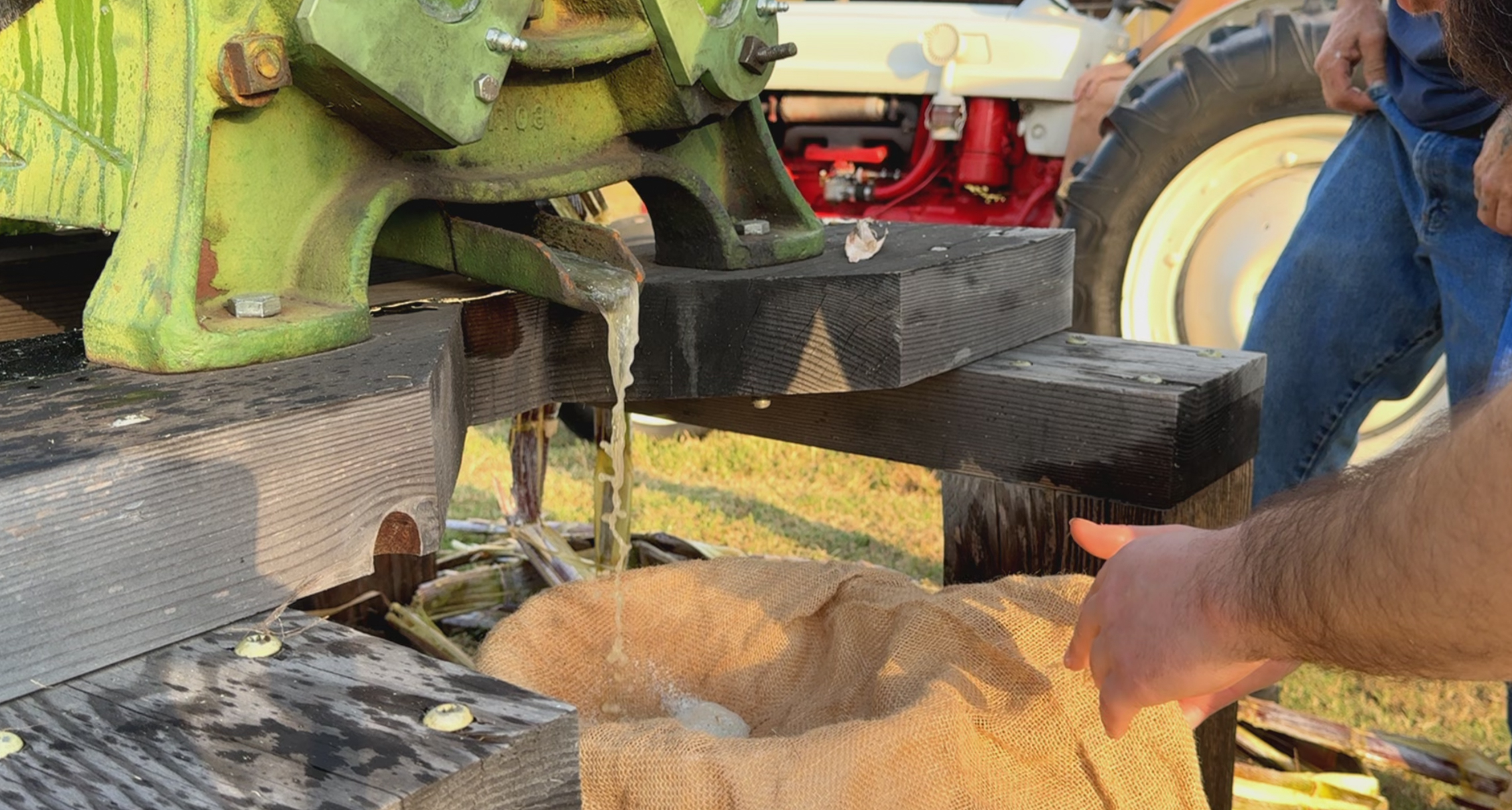
Today’s syrup process is at the south end of the depot in Mt. Vernon. Sugar cane is crushed in an antique Cane Mill that belonged to the Hicks family farm donated to the FCHA.
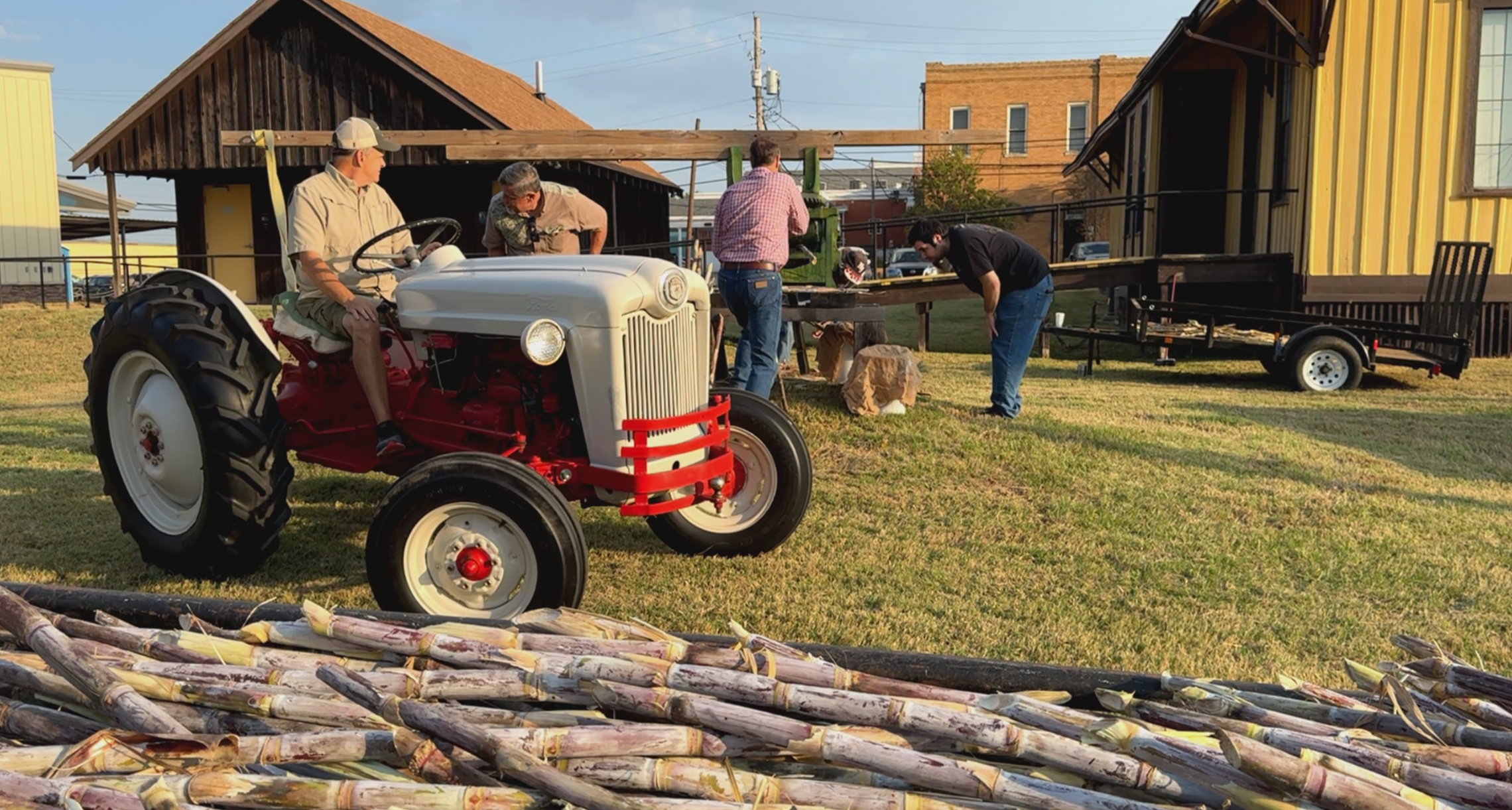
It’s anchored on a wooden timber framework beside the cooking shed. The cane mill is operated manually by turning a gear at the top. A pole is attached to the top gear and powered by a mule. Today the syrup team still uses a pole attached to the top gear, but powers the Cane Mill with an antique tractor belonging to Jerald Mowery, Mt. Vernon.
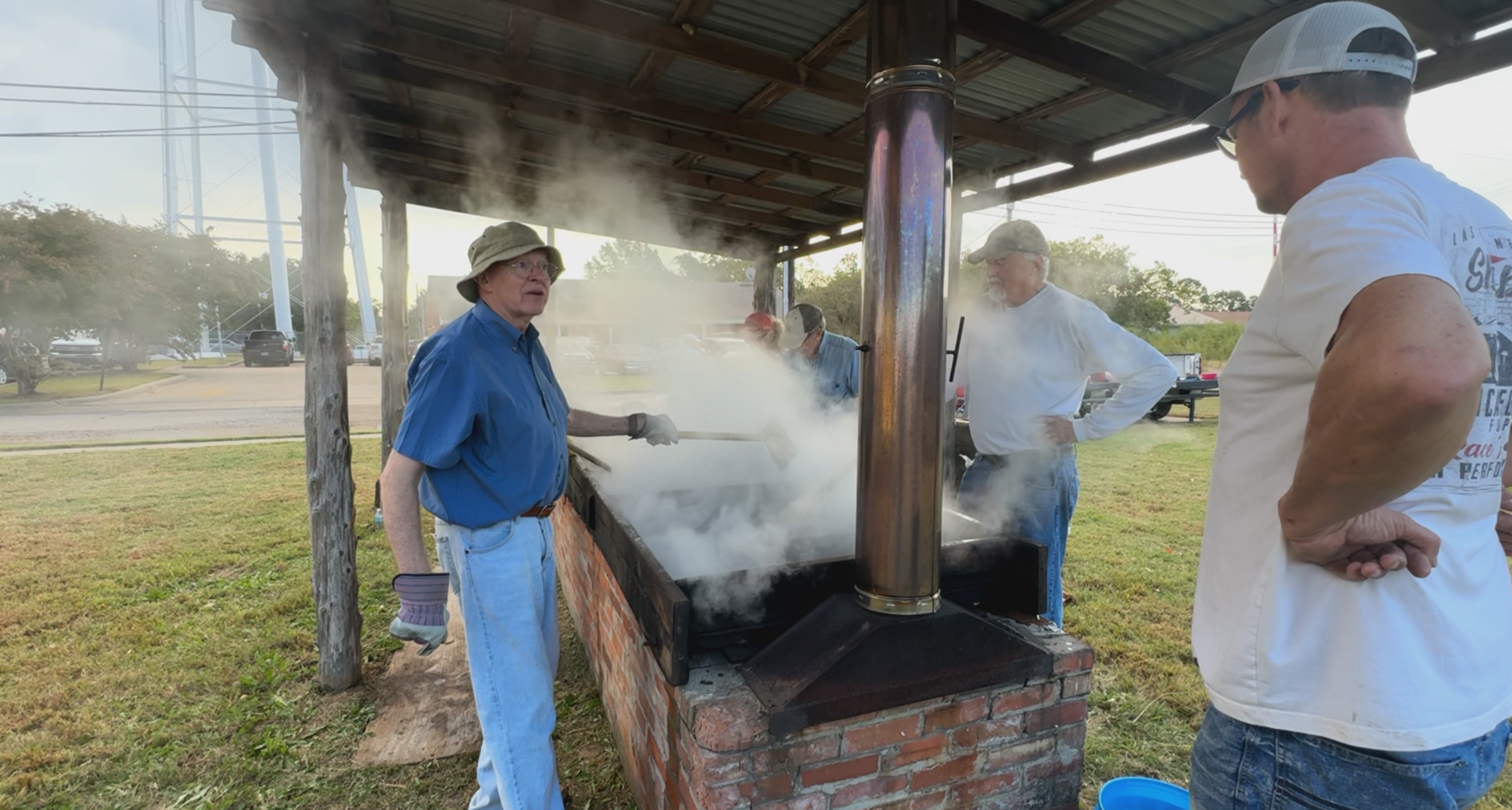
Cane juice runs out of a spout at the bottom of the cane mill. It is filtered and transferred to the evaporator, the long cooking pan. The brick box is for the cooking process. When enough moisture has evaporated, and the juice is at the preferred syrup viscosity, it is drained and filtered ready for distribution.
Farmers across Franklin County produced cane syrup – different methods – probably by 1870. The Hicks family tradition started with John Hodges Hicks producing cane syrup in
Alabama in the 1890s. His son, John Marshall Hicks (1877-1952), follows his sweetheart to Texas in 1906. They marry and commence their syrup production. In 1920, John Marshall
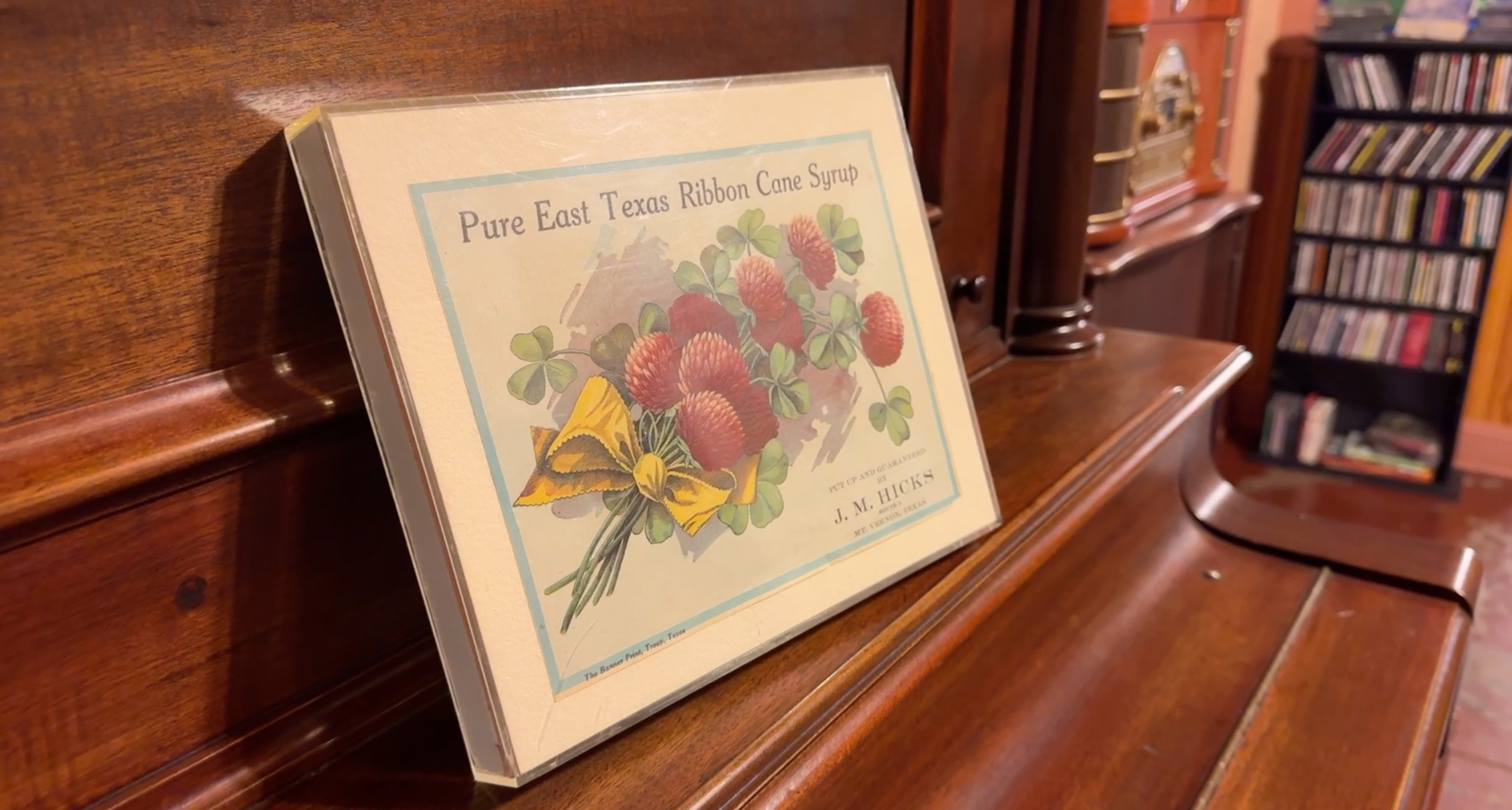
Hicks buys land west of Mt. Vernon and orders a Cook Superior Cane Mill which was delivered by rail and installed at his new farm. He produces syrup which bears the label: “Red Clover Ribbon Cane Syrup” – see photo. He markets quarts of the syrup with a large operation requiring field workers, production and sales employees. Frank Hicks (1912-1986) did work with his dad, but realized his future was in carpentry. Commercial syrup production on the Hicks farm ceased in 1953. The cane mill and cooking process operate once more by the FCHA at CountryFest.
Three modifications have been made to the syrup process. First, the Cane Mill was completely rebuilt by the Calwell Machine Company. Their work was donated to the FCHA.
Next, the antique evaporator pan has been replaced by a new one. Joshua Simmons, Custom and Commercial Fabrication in Cookville, manufactured a new evaporator pan. He recommended using stainless steel and donated labor to offset the expense. The pan is four feet wide and ten feet long. Thirdly, we changed from wood heat to propane. Jeremy Walker, AMJ Solutions in Mt. Vernon, completed this revision and donated the repair of the fire box. Richard Greene, with The Propane Company, installed the set-up for the supply line and will loan and deliver a propane supply tank sufficient for this year’s syrup session
FCHA’s purpose is to demonstrate the historical Franklin County process of making syrup. Visitors and volunteers are welcome to watch and invited to help. The syrup is not for sale. We give it away… well… except that which we keep for our biscuits and pancakes.