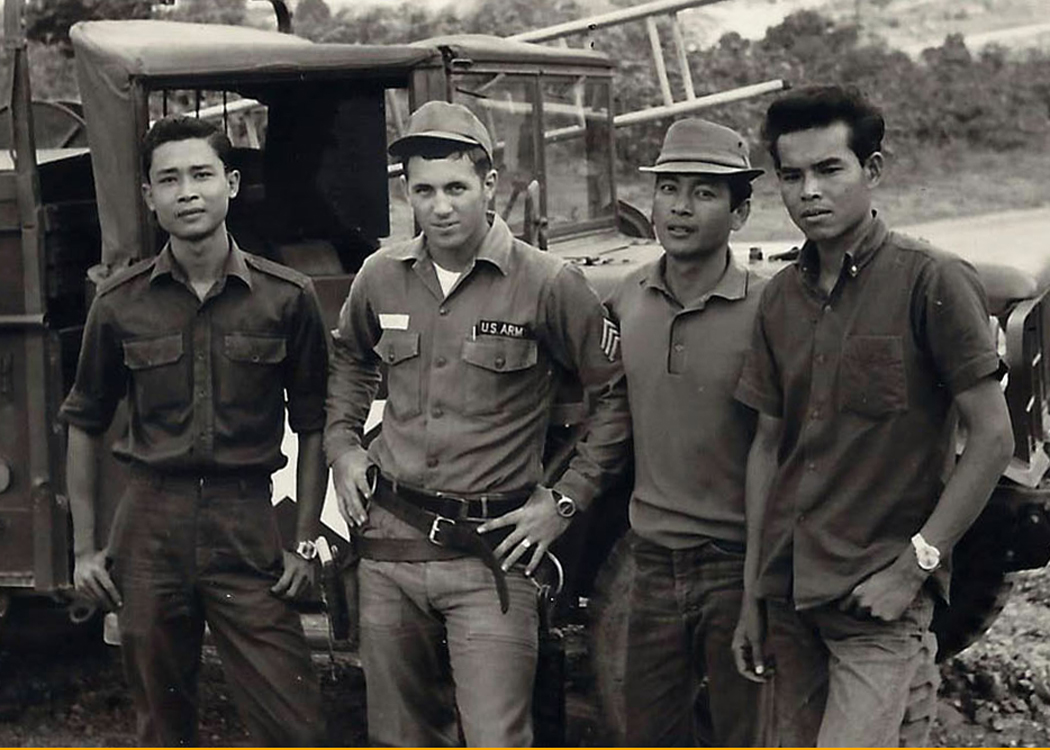


In 1883, Joe “Coon Creek” Gandy was born in a log house eight miles southwest of Mt. Vernon. From 1914 to 1953, his weekly “Coon Creek County Correspondence” in the Mt. Vernon Optic Herald enjoyed circulation throughout Franklin, Hopkins, and Delta Counties, whose voters he represented in the Texas Legislature from 1941 to 1953. In 1980, Gandy's lifelong friend E.E. Parnell told me that the Honorable Mr. Gandy lost his final campaign due to his unpopular support for increased regulation of automobiles. I believe Gandy’s columns can tell us much about early automobile traffic and road construction in rural Texas.
Coon Creek at the Wheel
When Gandy wrote his piece for January 29, 1915, he observed a problem that would only grow worse. Rural Free Delivery, introduced in 1906, gave mail carriers appreciation for automobiles as they became available; but lengthy unpaved routes could be unmanageable: “The roads are in such a bad shape that our mail does not make its full round, but we have to meet it at Cypress. If our mail routes were stopped it would be worse on us folks than flour going up.”
Because the county had neither funding nor machinery, “volunteers” used weighted scrapers pulled by mules to fill in ruts and smooth out roads. September 3, 1915, County Judge O.L. Reaves “asked by consent of meeting” that every man in the county “make and use a split log drag on the road that he travels most.” Any nonparticipant could be fined a dollar.
State and federal initiatives around that time did lead to major road construction. The Jefferson Highway ran east from Dallas to Mt. Vernon, south by today’s Holbrook Street, and then east along the present north access road of Interstate 30. From Winfield it meandered southeast to Jefferson. The Bankhead Highway followed the Jefferson Highway to Winfield and continued east. Finally, the Jim Hogg Highway came to Mt. Vernon from the north and then ran south.
The growing use of trucks for long trips with heavy loads, from huge logs to cotton bales, further increased the need for durable and effective paving. The new highways, though, were crude. February 20, 1920, the Optic reported that the Texas Highway Commission (formed in 1917) had withdrawn funding to gravel the Jim Hogg Highway in Franklin County. Gandy lamented, “I am sick at heart that we are not going to have any graveled road. While they may grade it up, but what will that be worth if they depend on the old system of work to keep it up.”
Road conditions notwithstanding, people wanted cars. In 1920 Franklin County had a population of 9,304; Mt. Vernon had 1,212 souls. Records from 1925 show 718 registered automobiles in Franklin County.
The desire for cars and good roads can be understood with a look at Gandy’s columns. March 5, 1920, he told of organ-shopping for the Morris Grove Church. He hitched a car ride to Sulphur Springs; then he rode a train back to Mt. Vernon and stayed the night with the Optic publisher Charles Devall. He attended a minstrel show the next day and then walked eight miles home. On the walk he suffered terribly from a blistered toe, “spitting blue fire every measure.”
October 5, 1923, he wrote of taking all day for a round trip into North Franklin County. He and three other men traveled by roads that circled back upon themselves again and again: “I will say this that if a man is not on the market for liver tonic when he starts on that run he will be when he gets back.”
A town map from that year showed a new “Automobile Repairing” business near our square’s northeast corner. Not only cars but their repairs, as well as roads and bridges, would cost more each passing year. January 18, 1924, Gandy addressed his county commissioner: “I hear the remark every day, ‘What goes with the tax money?’ There is not a bridge in all this country that is safe, and one not far from here is falling in, and it is on a public road, and people have to cross on it.”
George Wims’ Oil-Top Road Solution
For another decade rural county commissioners worked under severe budgetary constraints. David Wims reports that his grandfather, Franklin County Commissioner George Wims, went to Austin on several occasions over a twenty-seven-year tenure to lobby for road-improvement funds. According to David’s grandmother, her husband told one legislative committee, “On the Lavada Community’s roads in winter, mud gets as deep as the bridle bit in a horse’s mouth.”
Some relief came in the late 1930s when the WPA, backed by federal funds, constructed farm-to-market roads. In fact, FM 71 would become Lavada’s main thoroughfare. However, many rural communities struggled to survive on roads not in the farm-to-market network. And state and federal officials increasingly prioritized development of interurban highways.
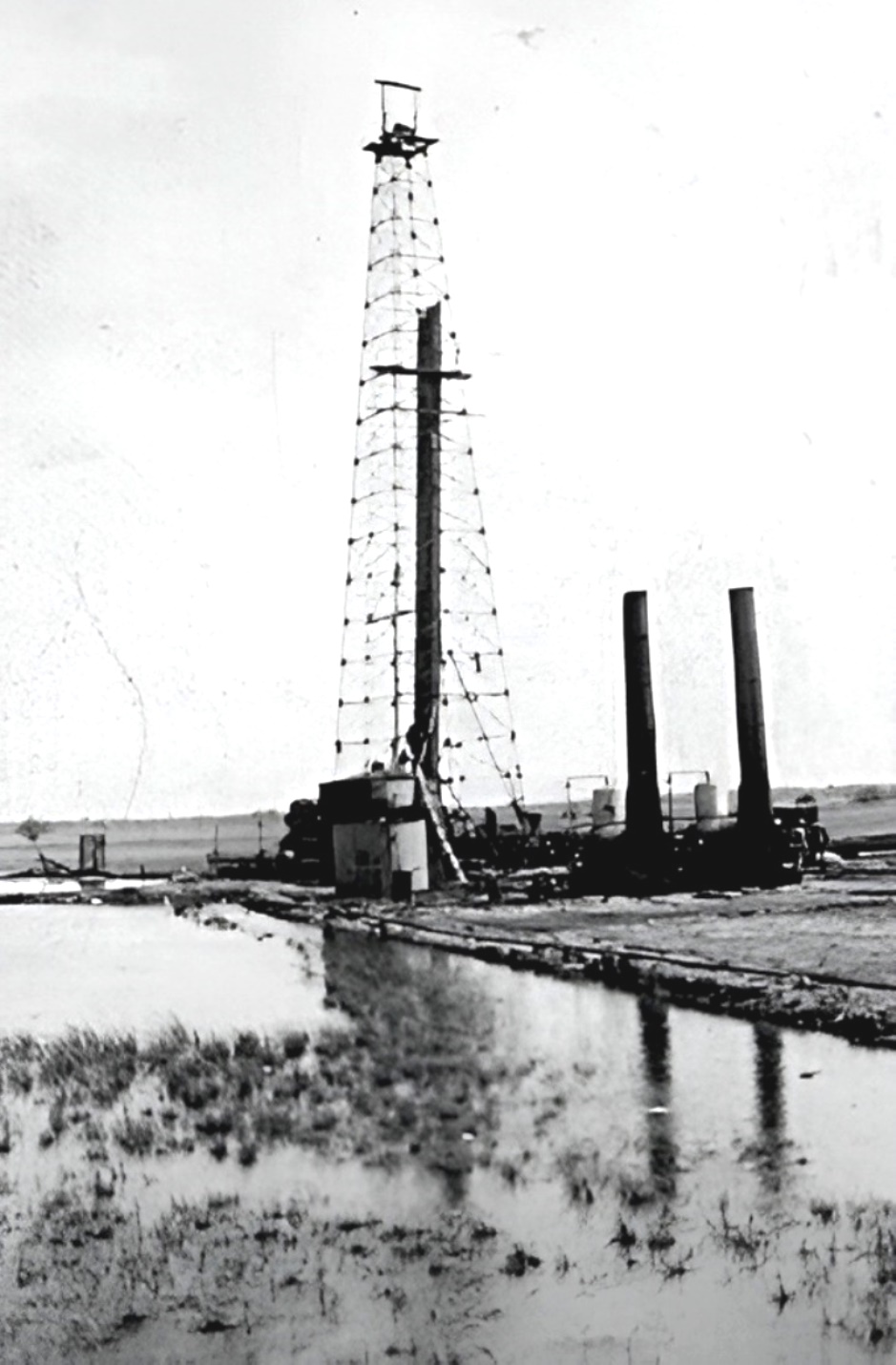
In an unexpected manner, those communities and their commissioners found help for their neglected rural byways. Amid the Great Depression, gushers erupted on the Talco oil field northeast of Mt. Vernon, and the pooled spillage seen in royalty owners' photos would not be wasted. Commissioner Wims discovered that slush-pit oil mixed with dirt could be used for paving, thus creating a network of easily maintained water-shedding oil-top roads.
This post is a shortened version of Chapter 37, "Car Trouble," in my book, Bottomland Credentials, available on Amazon.com.