Burn Ban in Effect. All outdoor burning is prohibited in Franklin County.



Storytelling is an art form. It has become a far cry from what many of the senior adults who, as children, were told not to be a storyteller, which, in those days, meant one prone to untruths and/or exaggerated statements veering from the facts.
The shift to a more positive connotation began even in our age group, when I was encouraged to compete in the University Interscholastic League Storytelling competition in the third grade. Shy and too nervous to tell the story, it was a short-lived experience for me.
Today, children over the age of six or seven seldom hear stories told from the lips of a live person with whom they are in the same room. Busy parents, grandparents, and others have allowed electronics to replace reading a book or telling a story to the younger generation. A topic for another day.
I was reminded of all this as my husband Nathan and I attended a performance of American Storytellers, brought to Mount Vernon by the Latortue family, who hosted it at Mount Vernon House for residents and others in the community.
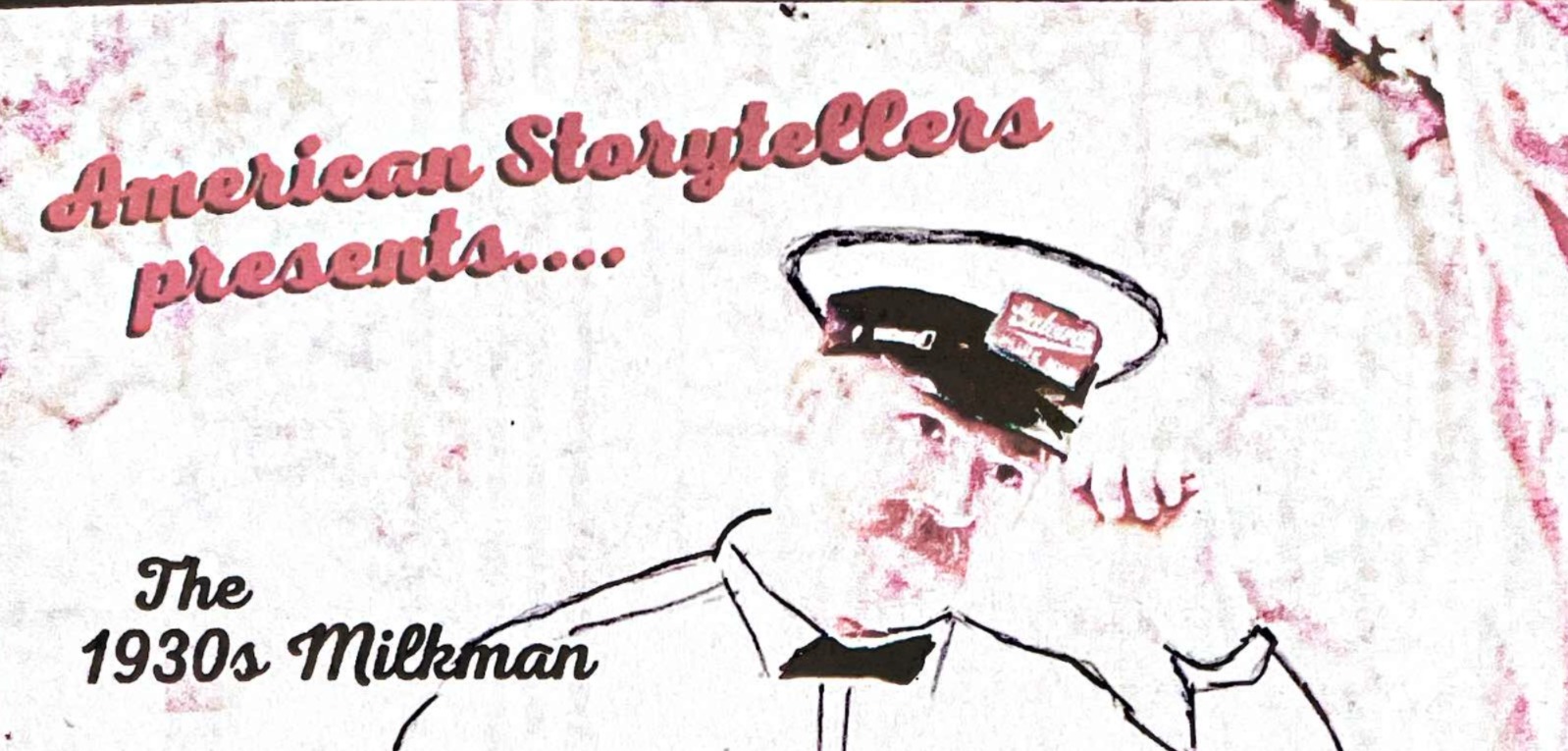
Nickolas “Nick” Waters, one of the founders of the American Storytellers organization, brought to life the story of Clarence Charles Nash, born in 1904, in the little town of Watonga, Oklahoma. Waters, dressed as a 1930s milk deliveryman, was the job Nash held delivering milk door-to-door in Hollywood and neighboring communities.
Many of the gathered crowd were taken back to youthful memories of their family farmsteads, including chores for children, such as milking the family cow. Time moved much more slowly then, and like many of us, finding things to occupy our time, Nash did the same. His was the discovery of sounds in nature, from livestock to fowl and from songbirds to insects. Later, being able to mimic many of those sounds would become his “bread and butter,” a phrase of the time.
Walt Disney built his “Disney Studios” on telling stories in a new way through a variety of characters that normally do not speak, but many animal lovers feel they understand them anyway. In 1934, Nash became the voice of a bigger-than-life duck in the cartoon short “The Wise Little Hen.” He was the only voice of Donald Duck for 51 years, appearing in more than 120 cartoons and films.
Nash even used a special technique to produce Donald’s halfway understandable speech over the years. He even dubbed Donald’s voice for the foreign releases of the films,, making it sound the same in other languages.
Waters used methods of great one-on-one storytelling to wrap the audience not just in the facts but in a feeling of the time being discussed. His character, the milkman and farm boy – not the duck, came to life as he told of the tribulations of the day that shaped people of that era. Hopes rose and fell with each attempt; the true-life Nash demonstrated his talent. Persistence, talent, and being in the right place at the right time brought joy to the character and the audience.
American Storytellers, LLC has several people and characters it portrays, keeping this art form alive. One of the best things about these stories is that they are true-life accounts of people who lived, worked, loved,, and struggled to achieve their goals.
The Waters agreed to a live broadcast of the performance, which can be viewed for about 25 more days on the “Mount Vernon Texas News” Facebook page via the following link: https://www.facebook.com/share/v/18UTkPNXsw/.