Burn Ban in Effect. All outdoor burning is prohibited in Franklin County.



Y'all get comfortable, you won't want to miss a word of this story!
North Vietnamese guards called him the incredibly stupid one. While they laughed, he memorized 256 prisoner's names to the tune of Old McDonald Had a Farm. He still remembers every one.
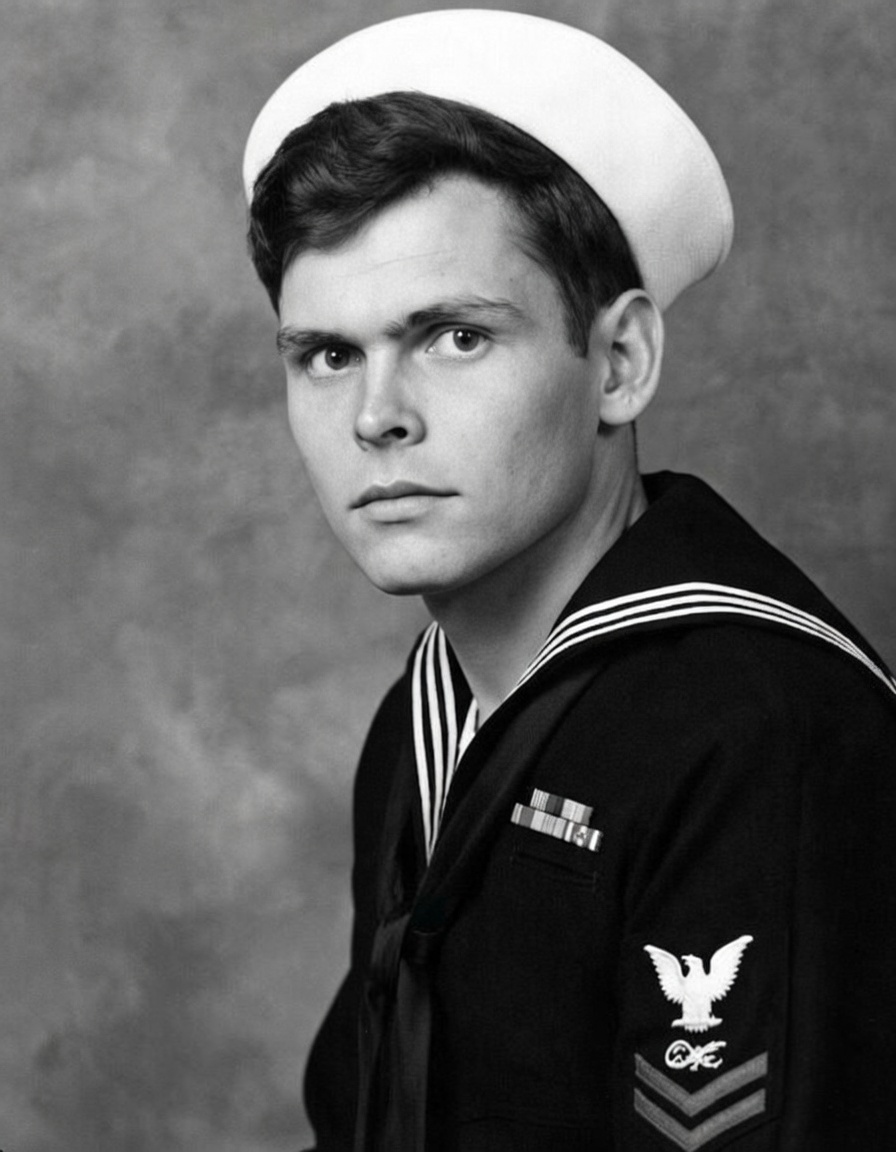
Douglas Hegdahl fell off a warship in the middle of the night. He was twenty years old. A farm kid from South Dakota who'd joined the Navy because he wanted to see Australia. Instead, they sent him to Vietnam. On April 6, 1967, he was standing on the deck of the USS Canberra in the Gulf of Tonkin when the recoil from a five-inch gun knocked him overboard.
The ship disappeared over the horizon. The booms of artillery drowned out his shouts. He treaded water for five hours in the dark, fashioned a life jacket from his pants, and swam toward shore when the sun came up. Twelve hours after he'd fallen, Cambodian fishermen pulled him from the water.
They were kind to him. Then they turned him over to the North Vietnamese.
The military beat him with rifle butts. Dragged him to the Hanoi Hilton, the infamous prison where American POWs were
tortured, starved, and broken. The interrogators didn't believe his story. A sailor knocked off a ship? It sounded absurd. They thought he was CIA A commando or a spy. Doug had to think fast. He decided to play dumb .
He exaggerated his South Dakota accent. Stared wide-eyed at water buffaloes and claimed he'd never seen one before. Asked
naNe questions about communism. When they ordered him to write a confession, he told them he couldn't read or write. The
interrogators-used to illiterate farmers in their own country actually believed him.
They assigned someone to teach him. After weeks of apparent failure, his teacher gave up. Doug was hopeless, he said.
Unteachable. The guards started calling him "The Incredibly Stupid One."
They stopped watching him closely.
That's when Doug Hegdahl became one of the most effective intelligence agents in the Hanoi Hilton.
The Vietnamese gave him cleaning duties. Let him sweep the prison yard. Wander between cellblocks. They thought he was
harmless-too stupid to be a threat. What they didn't know was that Doug had a photographic memory and the discipline on how to use it.
He memorized the layout of the entire prison complex. When the guards took him into Hanoi to get glasses-which he convinced them he needed so he could "learn to read about communism" he memorized the route from the prison to the city. Every tum. Every landmark. Every checkpoint. He sabotaged five North Vietnamese military trucks by waiting until the guards fell asleep, then putting small amounts of dirt
into their gas tanks. One by one, the trucks were towed out of the compound, disabled .
And then he did something extraordinary.
His cellmate was Air Force Captain Joseph Crecca, a fellow POW who understood the power of memory. Crecca knew that the
families of captured Americans were desperate for information. Many men were listed as "missing in action"-their status
unknown, their survival uncertain. If someone could get a list of names out, those men could be reclassified from MIA to POW. It would change everything. Crecca began teaching Doug the names. But it wasn't just names, it was capture dates, methods of capture, service branches, ranks, Social Security numbers. Personal details like the names of their children or their dogs, so families could verify the information was real.
Doug needed a system to remember it all. Crecca suggested a melody. Something simple. Repetitive. Impossible to forget.
Doug chose Old MacDonald Had a Farm.
Every day, he added more names to the song. Hummed it while he swept Sang it silently in his cell. The guards thought it was
more proof of his simple mind-a farm boy homesick for the only tune he knew.
They had no idea he was building a database of 256 American prisoners of war in his head.
By 1969, Doug had been imprisoned for two years. His new cellmate was Lieutenant Commander Richard Stratton, the
highest-ranking American officer in the camp. Stratton respected Doug's intelligence and courage. Together, they turned Doug's
freedom of movement into an intelligence operation-Doug as courier, Stratton as case officer.
Then the North Vietnamese offered early release to three prisoners.
Doug was one of them.
He refused. The POWs had made a pact: all would leave together, or none would leave. To accept early release felt like a betrayal.
Doug even gave Tom Hayden the finger when the activist toured the prison, hoping his behavior would get him denied.
But Stratton pulled rank. He ordered Doug to accept release. "You have to go," Stratton told him. "You're carrying the names.
Their families need to know they're alive. The government needs to know they're here."
On August 5, 1969, Douglas Hegdahl walked out of the Hanoi Hilton. He was twenty-three years old. He'd spent two years
pretending to be an idiot while secretly conducting one of the most important intelligence operations of the Vietnam War.
When he returned to the United States, he delivered every name. Every rank. Every Social Security number. Every personal detail of 256 men still trapped in North Vietnamese prisons.
Families who had spent years not knowing if their sons, husbands, and fathers were alive finally had confirmation. Men listed as
"missing" were reclassified as prisoners of war, which put enormous pressure on North Vietnam to account for them at the war's end.
Doug's intelligence likely saved lives.
In December 1970, the U.S. held secret negotiations with North Vietnam about ending the war. Doug was there. He used his memory to pressure the North Vietnamese into better treatment and eventual release of POWs.
After the war, he became an instructor at the Navy's SERE school-Survival, Evasion, Resistance, and Escape-teaching other servicemembers how to survive captivity.
In 1998, thirty years after his release, Doug appeared at the Richard Nixon Presidential Library. He stood in front of an audience of veterans and family members and did something remarkable.
He sang .
To the tune of Old MacDonald Had a Farm, he recited the names of more than two hundred fiftysix men who had been imprisoned with him in the Hanoi Hilton. Every name. Every rank. Decades later, he still remembered them all.
Fellow POW Dick Stratton later wrote: "Doug Hegdahl, a high school graduate from the mess decks who fell off a ship, has five enemy trucks to his credit. The Incredibly Stupid One,' my personal hero, is the archetype of the innovative, resourceful and courageous American Sailor."
Douglas Hegdahl never fired a shot in combat. But he understood something profound: that sometimes the greatest act of resistance is to let your enemy underestimate you. That memory can be a weapon. That a children's song can carry the weight of hundreds of lives.
He's seventy-eight now. Living quietly in San Diego. He doesn't seek attention. But among veterans and POWs, his name is legend.
The farm boy who fell off a ship. The "stupid one" who outsmarted an entire enemy prison system. The sailor who turned a nursery rhyme into an act of defiance that changed the course of a war.